
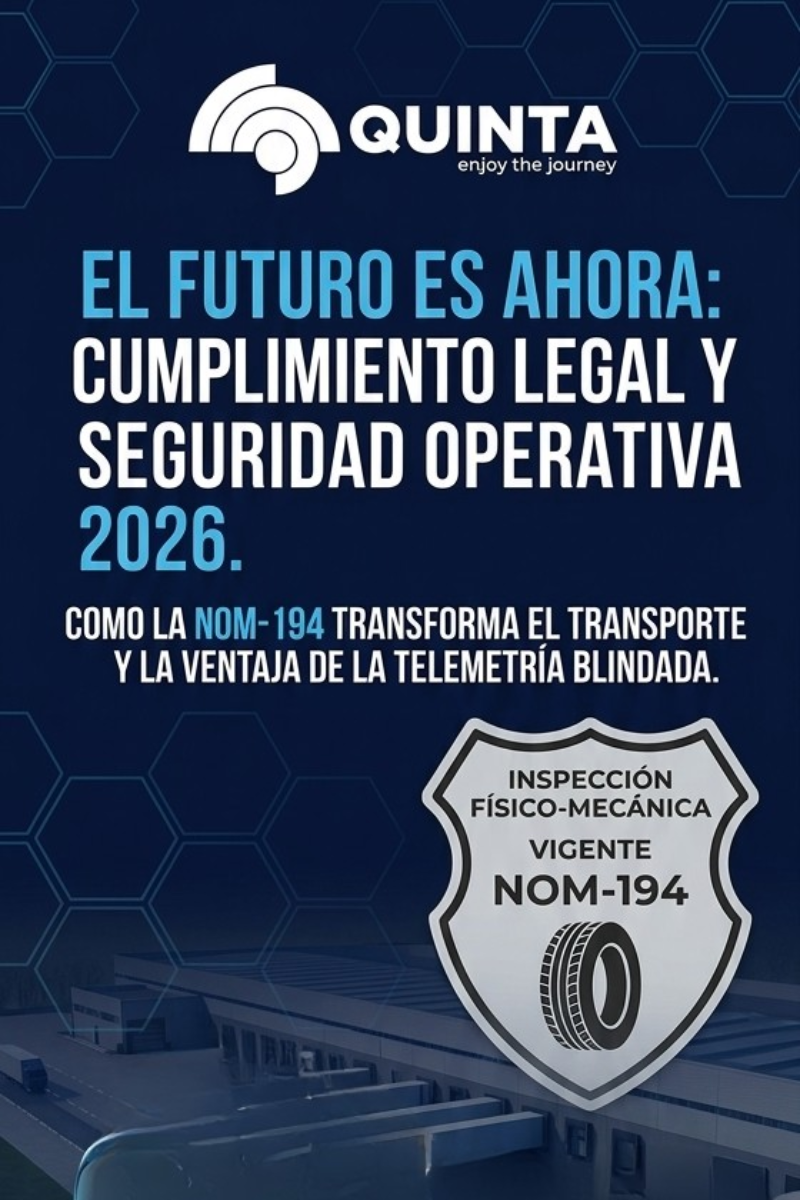
The outlook for freight and commercial vehicle transportation in Mexico has reached a turning point in the second quarter of 2026. With the full implementation of the updated regulations, NOM-194-SE-2021 And with the tightening of physical-mechanical inspections on federal stretches, tire monitoring has ceased to be an efficiency option and has become a standard of legal compliance and national security.
1. The regulatory pillar: NOM-194 and its impact on the fleet
Since January 2025, Mexican regulations have established that all new vehicles sold in the country must be factory-installed with a Tire Pressure Monitoring System (TPMS).
However, by April 2026, the conversation had shifted to the inspection of operating fleets. Transportation authorities have begun linking tire condition to civil liability in road incidents. A vehicle operating with tire pressures outside the manufacturer's specifications is not only inefficient, but is now considered "operational negligence" under the new SICT inspection tables.
2. Cybersecurity: The invisible shield of modern telemetry
Unlike the basic radio frequency (RF) systems of the past, which emitted signals vulnerable to interception, the technological vanguard of 2026 has turned cybersecurity into a strategic advantage.
The implementation of high-end Bluetooth connectivity protocols with industrial-grade encryption allows each tire's data to travel securely and privately. This not only guarantees data accuracy but also acts as a "digital shield," preventing third parties from tracking or manipulating the units' identities. In an era where logistical information is invaluable, having secure telemetry ensures that the fleet's operational intelligence remains exclusively in the carrier's hands.
3. “Zero Tolerance” inspections on federal sections
So far this year, inspection operations on the country's main logistics routes have reported a 35% increase in penalties related to tire condition. Current critical inspection points include:
- Tread integrity: Strict verification of the minimum safety drawing (1.6 mm).
- Axle pressure balance: Penalties for disparities greater than 20% that compromise stability and emergency braking.
Fifth Grade Analysis: The Transition to the Smart Tire
As thought leaders in the sector, we've observed that the market has moved away from purchasing isolated sensors and toward adopting asset management systems. The integration of Artificial Intelligence allows static pressure data to be transformed into a dynamic projection of lifespan.
The Mexican transportation sector is undergoing a phase of accelerated professionalization. Those companies that view tire monitoring as an investment protection system, rather than an accessory, will be the ones that successfully navigate the operating costs and stringent roadside inspections that define 2026.
Join the evolution of smart transportation
In QuintaWe don't just monitor tires; we secure your operation with the most advanced AI technology and secure connectivity on the market. We invite you to explore these topics further and transform your tire business into profitability with data.
- Explore our technology: www.quinta.tech
- Stay updated on our Blog: Visit our latest posts here
- Connect with us: Follow us on our social media channels to stay up to date with industry trends.
Ready to take the next step? Receive personalized advice and discover how our telemetry can optimize your fleet today.
Contact us via WhatsApp: > 446 265 4870
Quinta | Enjoy the journey.
 English
  Spanish